
TRAINING PLANNING AND SCHEDULING FOR EPC PROJECTS
Daftar isi :
Training Engineering, Procurement And Construction Project
Training Calculate Critical Path
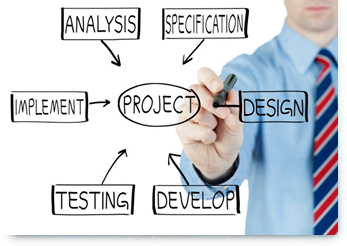
The benefit after completing this course the participants will have a better knowledge & skill on Project Management in accordance with International Management Standards
Course Overview
In this course you will focus on managing the typical constrains of many project such as; limit on time, human resources, materials, budget and specifications. Learn to master techniques such as estimating, forecasting, budgeting, monitoring, controlling, and analyzing and reporting costs and interpreting the meaning of earn value data. Learn a sound, logical framework for scheduling and controlling project activities and discover ways to work within the identified constraints without curtailing creativity and innovation.
Objectives
This training course will provide participants with a thorough background in the concepts of Planning and Scheduling Engineering and Construction projects.
Course Methodology
The course addresses how to identify, monitor, and balance Information crucial for the successful management of projects. It will discuss the development of a baseline performance management plan for the project that will allow the efficient compilation and the timely generation of quantitative performance comparisons. The comparisons highlight significant performance departures (“actual vs. baseline”) and allow for preventive and early remedial and corrective actions.
You will learn to
The Practical sessions will provide hands-on experience. Workshops create and track sample project from planning phase till controlling phase (updating).
Who should attend?
The Course is designed to be taught interactively with syndicates and personal exercises, facilitation of group discussions, training videos, and discussions of real life examples.
Course Topics
- Build schedules and budgets that transform project constraints into project success
- Construct work breakdown structures (WBS) and network diagrams and estimate task durations
- Calculate Critical Path (CPM) and optimise your project plan
- Allocate costs and chart expected cash flow
- Assign resources effectively and respond to end-date changes
- Perform Earned Value Analysis (EVA) to keep the project on track
The course is targeted at the Oil & Gas industry, Petrochemical, Power plant, Mining & Minerals, Chemical, Construction, EPC Company & Contractor, Fabricator, Vendors & Manufacturer, Creditor, Insurance Company and Government. The profiles of participants include but are not limited to
- Project Manager
- Project Engineering
- Scheduler
- Project Planning Engineer
- Lead of Disciplines Engineer
- Disciplines Engineer
- Finance Project Executive / Manager
- Al executives involved in technical projects planning & cost estimation
Essential Background
- Overview of teh project management life-cycle
- The triple constraints
- Planning tools
- Project requirements; a review
- The work breakdown structure; a review
- Challenges in scheduling & control
Best Practices for Project Planning
- Building the foundation
- Generating your WBS
- Developing a product-oriented focus
- Identifying the appropriate level of detail
- Diagramming network relationships
- Working with network diagrams
- Applyng CPM and PERT diagrams
- Defining precedence relationships
- Establishing dependencies
- Determining lead and lag times
- Constructing PDM diagrams
Integrating the Schedule and Critical Path
- Computing the Critical Path
- Adding task durations to determine path lengths
- Identifying the critical path
- Recognising near-critical and non-critical paths
- Determining probabilistic critical paths
- Prioritising your management time
- Creating Gantt charts
- Building Gantt & milestone charts following industry standards
- Representing the relative durations of tasks graphically
- Fine-tuning your plan
- Calculating activity float
- Planning delivery by applying earliest start times
- Optimising the plan using latest start times
- Rescheduling activities within their float tolerance
Realistic Resourcing
- Schedules that make sense
- Factoring in productivity
- Allocating resources effectively
- Baselining your plan
- Responding to delivery-date changes
- Fast-tracking the project plan
- Crashing the Critical Path
- Leveraging Goldratt’s Critical Chain
Measuring and Improving Performance
- Monitoring your plan
- Recording actual durations
- Tracking cash flow
- Assessing performance
- Determining and summarising project status
- Performing EVA
- Calculating schedule and budget efficiency
- Quantifying cost and schedule variance
- Projecting impact on project outcomes
- Mapping EVA to cost accounting
- Advanced EV forecasting tools
- Reconciling and addressing project issues
Communicating with Stakeholders
- Incorporating inbound information into outbound reports
- Applying the right level of detail
- Interfacing project information to organisational reporting
The Exit Strategy
- Steps in completing the project
- Scope verification
- Contract close-out
- Administration closure
Course Instructor
Ir. Pulung Susilo Rahardjo
He received Bachelor degree in Aeronautical Engineering from Mechanical Engineering Department, Industrial Engineering Faculty, Bandung Institute of Technology (ITB) on 1981. He has a professional and practice experiences as Project Management Senior Staff more than 35 years in National & Multinational Company special Oil & Gas Onshore & Offshore Industry. He also attended at many project management seminar & course program at Indonesian & overseas institution. He retired from Petronas Carigali Indonesia (PCINO) on year 2014 and focused in Project Management Advisor and Project Management Instructor.
Jadwal Pelatihan Lokal Media Training 2026
TEMPAT PELAKSANAAN PELATIHAN
- REGULER TRAINING
- YOGYAKARTA
- JAKARTA
- BANDUNG
- MALANG
- SURABAYA
- BALI
- LOMBOK – NTB
- IN HOUSE TRAINING
- ONLINE TRAINING VIA ZOOM
Note :
Waktu dan tempat pelaksanaan pelatihan bisa kami sesuaikan dengan kebutuhan peserta.
Catatan : Biaya diatas belum termasuk akomodasi/penginapan. jadwal pelatihan engineering, procurement and construction project
Investasi Pelatihan Lokal Media Training: jadwal training calculate critical path
- Investasipelatihan selama tiga hari tersebut menyesuaikan dengan jumlah peserta
- Apabila perusahaan membutuhkan paket in house training, anggaran investasi pelatihan dapat menyesuaikan dengan anggaran perusahaan.
Fasilitas Pelatihan di Lokal Media Training: jadwal training perform earned value analysis
- Hotel
- Tempat Pelatihan
- Module / Handout
- FREE Flashdisk
- Sertifikat
- FREE Bag or bagpackers (Tas Training)
- Training Kit (Dokumentasi photo, Blocknote, ATK, etc)
- 2xCoffe Break & 1 Lunch, Dinner
- FREE Souvenir Exclusive
- Training room full AC and Multimedia
Technorati Tags: jadwal training planning and scheduling for epc projects pasti jalan,jadwal training engineering,procurement and construction project pasti jalan,jadwal training calculate critical path pasti jalan,jadwal training perform earned value analysis pasti jalan,pelatihan planning and scheduling for epc projects pasti jalan,pelatihan engineering,procurement and construction project pasti running


